


Ketamine Infusion For Pain: A Complete Guide to Chronic Pain Relief
Chronic pain affects millions of people worldwide and can significantly reduce quality of life. Many individuals suffering from nerve pain, fibromyalgia, migraines, or complex regional pain syndrome struggle to find effective relief through traditional medications. As a result, innovative treatments such as Ketamine Infusion For Pain have gained increasing attention in the medical community. Originally developed as an anesthetic, ketamine is now being used in specialized clinics as a promising therapy for patients with severe and treatment-resistant pain conditions.
Unlike conventional pain medications that primarily mask symptoms, ketamine works directly on the brain and nervous system to help regulate pain signals. By targeting NMDA receptors and supporting neural pathway changes, ketamine infusion therapy may help reset how the body processes chronic pain. This unique mechanism is one reason many patients searching online for ketamine treatments near me, ketamines treatment near me, or ketamine treatment for depression near me are exploring this therapy as a potential option.
In this comprehensive guide, we’ll explore how Ketamine Infusion For Pain works, the conditions it may help treat, its benefits and risks, and what patients should expect during treatment. Understanding this therapy can help individuals make informed decisions when considering advanced pain management solutions.
What Is Ketamine Infusion Therapy?
Ketamine is a medication that was first developed in the 1960s and approved for medical use as an anesthetic in 1970. It has long been used in hospitals and emergency medicine because of its ability to provide fast-acting pain relief and sedation while maintaining stable breathing and blood pressure. Due to these properties, ketamine quickly became a widely used anesthetic in surgical procedures, trauma care, and battlefield medicine.
Over the years, researchers discovered that ketamine also affects certain receptors in the brain—particularly N-methyl-D-aspartate (NMDA) receptors, which play an important role in how the nervous system processes pain signals. This discovery led to new medical applications beyond anesthesia, including the use of Ketamine Infusion For Pain and certain mental health conditions.
In modern medicine, ketamine infusion therapy involves administering low doses of ketamine intravenously (IV) in a controlled clinical setting. Unlike the high doses used during surgery, these lower doses are designed to influence the nervous system and brain pathways associated with chronic pain and mood regulation. By altering the way the brain interprets pain signals, ketamine may help reduce symptoms in patients who have not responded to traditional treatments.
Because of its unique neurological effects, ketamine is also studied and sometimes used for treatment-resistant mental health conditions. This is why many patients searching online for ketamine treatment for depression near me or ketamine injections for depression often encounter information about ketamine infusion clinics that specialize in these therapies.
Beyond human medicine, ketamine is also widely used in veterinary practice as an anesthetic. For example, a ketamine injection for dogs may be administered by veterinarians during surgical procedures or diagnostic examinations because it provides effective sedation and pain control.
Today, ketamine infusion therapy is performed in specialized clinics and hospitals where trained medical professionals monitor patients closely during treatment. Individuals exploring advanced pain management options often search for ketamine treatments near me or ketamines treatment near me to find licensed clinics that provide this therapy safely and legally.
How Ketamine Infusion For Pain Works
Understanding how Ketamine Infusion For Pain works requires looking at how the brain and nervous system process pain signals. Chronic pain conditions often develop when the nervous system becomes overly sensitive, causing the brain to continuously interpret certain signals as pain even after the original injury or trigger has healed. This process is known as central sensitization, and it can make many chronic pain disorders difficult to treat with traditional medications.
Ketamine works differently from most standard pain treatments. Instead of simply blocking pain temporarily, ketamine targets specific receptors in the brain and spinal cord that influence how pain signals are transmitted and interpreted.
NMDA Receptor Blocking
One of the primary ways Ketamine Infusion For Pain works is by blocking N-methyl-D-aspartate (NMDA) receptors in the brain. These receptors play a major role in transmitting pain signals between nerve cells.
When NMDA receptors become overactive, the nervous system can amplify pain signals, making even mild stimuli feel extremely painful. Ketamine helps interrupt this process by temporarily blocking these receptors. As a result, the brain may stop amplifying pain signals, which can lead to noticeable pain relief for many patients.
This mechanism is particularly important for individuals with neuropathic pain, a type of chronic pain caused by nerve damage or dysfunction.
Resetting Pain Pathways
Another important function of Ketamine Infusion For Pain is its ability to help “reset” abnormal pain pathways in the nervous system. In chronic pain conditions, the brain may develop long-lasting patterns that continuously send pain signals even when there is no ongoing injury.
Ketamine may help disrupt these patterns by reducing hypersensitivity in the central nervous system. Over time, this process can help normalize how the brain responds to pain signals, potentially providing longer-lasting relief compared to traditional pain medications.
Because of this neurological effect, ketamine therapy has been explored for several difficult-to-treat conditions, including complex regional pain syndrome (CRPS), fibromyalgia, and severe neuropathic pain.
Promoting Brain Neuroplasticity
Another key benefit of ketamine therapy is its influence on neuroplasticity, which refers to the brain’s ability to create new neural connections and reorganize existing ones.
Ketamine can stimulate the release of certain brain chemicals that support the growth of new synaptic connections. These changes may help improve communication between nerve cells and allow the brain to process pain signals more effectively.
This effect may also explain why ketamine is sometimes used in specialized clinics for mental health conditions, and why people searching for ketamine treatment for depression near me or ketamine injections for depression often find similar treatment approaches involving ketamine infusion therapy.
Rapid Action Compared to Traditional Treatments
One unique aspect of Ketamine Infusion For Pain is its relatively fast onset of action. Traditional pain medications or antidepressants may take weeks or months to show noticeable results. In contrast, some patients report improvements in pain levels within hours or days after receiving ketamine infusion therapy.
However, results can vary depending on the individual, the underlying condition, and the treatment protocol recommended by healthcare professionals. Many patients receive a series of infusions over several sessions to achieve the best results.
A Multidimensional Approach to Pain Management
Because chronic pain often involves both physical and neurological components, ketamine therapy is typically used as part of a comprehensive pain management plan. Doctors may combine ketamine infusion therapy with other treatments such as physical therapy, counseling, lifestyle changes, and conventional medications.
Individuals interested in this therapy often search online for ketamine treatments near me or ketamines treatment near me to find specialized clinics that provide medically supervised infusion therapy.
When administered by trained healthcare professionals in a controlled clinical environment, Ketamine Infusion For Pain may offer a promising option for patients who have not found relief through traditional pain management methods.
Conditions Treated With Ketamine Infusion For Pain
Ketamine Infusion For Pain is often considered when chronic pain conditions do not respond well to conventional treatments such as anti-inflammatory medications, physical therapy, or nerve pain drugs. Because ketamine works directly on the brain and nervous system, it may help reduce abnormal pain signaling associated with several difficult-to-treat disorders.
Pain specialists sometimes recommend ketamine infusion therapy for patients experiencing severe nerve-related pain or long-term conditions that significantly affect daily life. Below are some of the most common conditions where Ketamine Infusion For Pain may be considered as part of a comprehensive treatment plan.
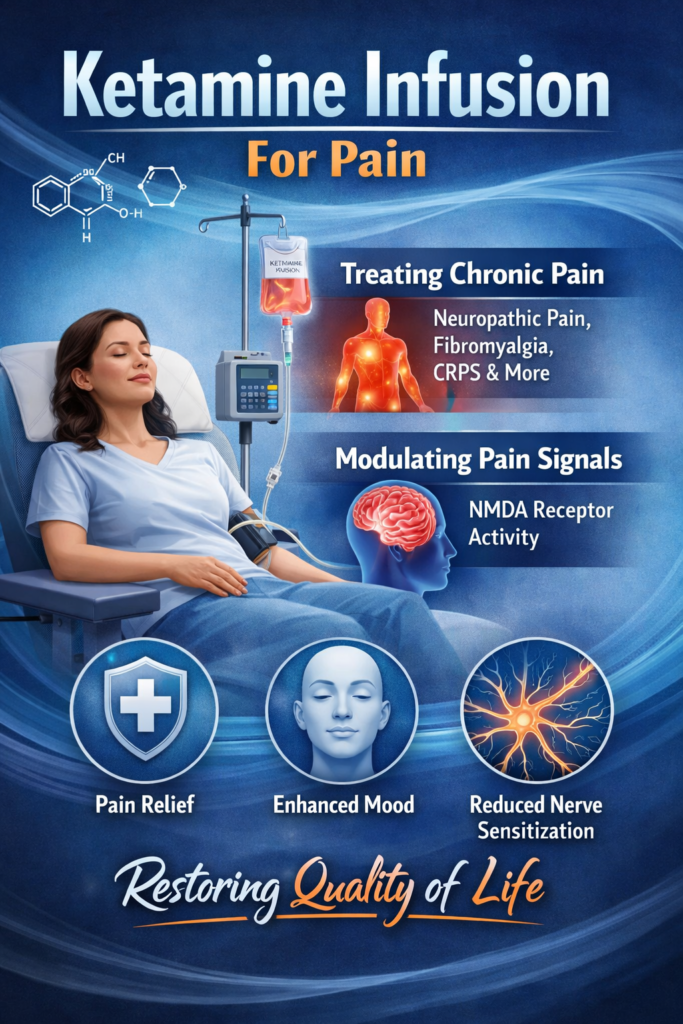
What Happens During a Ketamine Infusion Session?
Understanding what to expect during a Ketamine Infusion For Pain session can help patients feel more comfortable and prepared before beginning treatment. The procedure is typically performed in a specialized medical clinic under the supervision of trained healthcare professionals.
Initial Consultation
Before starting treatment, patients usually undergo a detailed medical consultation. During this evaluation, the healthcare provider reviews the patient’s medical history, current medications, and pain condition to determine whether Ketamine Infusion For Pain is an appropriate option. The doctor may also discuss treatment goals, potential benefits, and possible side effects to ensure the patient fully understands the therapy.
Infusion Procedure
During the infusion session, the patient is seated or lying comfortably in a treatment room while medical staff monitor vital signs such as heart rate, blood pressure, and oxygen levels. Ketamine is administered slowly through an intravenous (IV) line over a set period of time, often ranging from about 40 minutes to an hour depending on the treatment protocol. Throughout the session, trained professionals remain nearby to ensure safety and patient comfort.
Recovery Process
After the infusion is completed, patients typically remain in the clinic for a short observation period while the immediate effects wear off. Some individuals may feel relaxed, slightly drowsy, or lightheaded for a short time after treatment. Most clinics recommend arranging transportation home after the session and allowing time to rest before resuming normal activities. Over a series of sessions, some patients receiving Ketamine Infusion For Pain may begin to notice improvements in their symptoms.
Safety and Legal Considerations
When exploring treatments such as Ketamine Infusion For Pain, it is important to understand the safety and legal aspects surrounding ketamine use. Ketamine is a prescription-controlled medication in many countries and must only be administered by licensed medical professionals in approved healthcare settings. Clinics that offer ketamine therapy follow strict medical protocols to ensure patient safety, including professional monitoring and proper dosage control.
Many people searching online may come across questions like can you buy ketamine online, buy ketamine online, or ketamine buy online. However, ketamine should only be obtained legally through qualified healthcare providers or authorized medical facilities. Attempting to purchase ketamine from unverified sources can pose serious health risks and may violate local regulations.
Patients seeking treatment should instead consult licensed clinics or physicians who specialize in ketamine therapy. Individuals often start their search by looking for reputable medical providers rather than asking where do people buy ketamine, since legitimate treatment always involves a medical evaluation and supervised care. Ensuring treatment is delivered in a professional clinical environment is essential for both safety and effectiveness.